Are you dealing with a finicky eater? Does your youngster find it difficult to eat their veggies? If our kids aren’t eating foods we know are healthy for them, we may feel like we’re failing. They might fling the meal they dislike into the ground. We choose our battles, games like kids Bini Games for learning, and sometimes we just give up and say, “Well, at least they’re eating something.”
However, the reality is that other aspects of our children’s lives may suffer if they aren’t receiving the nutrients they require from their food. This could have an impact on their behavior, sleep, and academic performance. The good news is that we can increase our kids’ level of engagement during mealtimes, which could increase their cooperation. A little more work is required, but it will all be worthwhile when you see how happy your child becomes.
Why Food-Themed Games Appeal to Kids
Food play is a crucial aspect of a child’s development. Children learn about the world and form a more relaxed and positive association with a range of meals by playing with their food. It increases their interest and appeals to their senses.
Additionally, using food to play can be a communal activity. Children learn to cooperate, communicate, and share when they play with their food together. They can act as a chef or serve food to their “customers,” among other responsibilities. Their social skills and understanding of the value of sharing are improved by this kind of play.
The Educational Benefits of Food Games
Children can learn about food in an engaging and entertaining way by participating in games and activities. Play-based learning promotes children’s growth in a variety of domains, including intellectual, social, emotional, and physical. The following is a list of advantages these games provide:
Improves language and communication
Playing food with your child might turn into a great way to have conversations. They can pick up new terminology about food, colors, textures, and flavors while they play. They can improve their language skills by being encouraged to express what they see, feel, and taste. A greater grasp of nutrition and the world around them is also fostered by talking about different food groups, healthy options, and the origins of particular foods.
Fosters emotional and social development
Your child’s social skills and emotional expression can be greatly enhanced by food play. Playing with food gives them a safe way to experiment with various emotions and experiences. Invite kids to tell anecdotes about their favorite meals or to discuss the feelings they have with particular cuisines. Playing with food with friends and siblings fosters cooperation, sharing, and taking turns; all of which are essential social skills.
Exploring Bini Games’ Funny Food World
For young learners, Funny Food World by Bini Games combines entertaining, story-driven experiences with the development of fundamental skills. The program supports the development of pre-math and pre-literacy skills while bolstering cognitive areas like logic, memory, and categorization through interactive puzzles, mini-games, and creative activities.
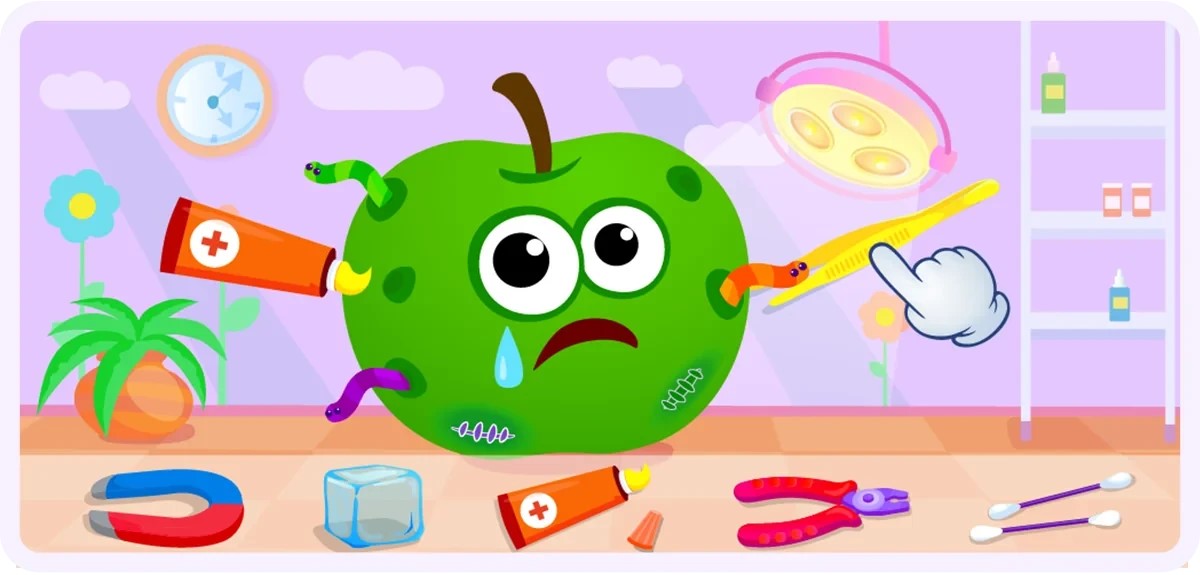
Children are exposed to fundamental ideas in a gamified manner through multimodal interaction, which promotes exploration, problem-solving, and self-directed learning. Look at:
- Cognitive skill development: Games that involve matching, sorting, and sequencing help improve memory and logical thinking.
- Early academic readiness: Activities incorporate basic language exposure, form identification, and counting into games.
- Motivational design: Animated characters and instant feedback keep people interested and encourage perseverance.
Funny Food World is an example of how digital learning environments can promote both academic readiness and more general developmental results by integrating structured educational assignments into a cartoonish world with a food theme. Educational toddler games by Bini Games are equally useful as a supplemental resource in early childhood education settings and for autonomous inquiry at home due to its user-friendly design and customizable progression.
Tips for Parents to Maximize Learning Through Play
Parents can incorporate the digital teachings into their daily routines by encouraging their kids to try actual foods during mealtimes, which will further emphasize the advantages of Funny Food World https://binibambini.com/products/funny-food-world/. Virtual play and hands-on exploration are connected through activities like labeling colors and textures and organizing fruits into patterns. In addition to screen time, try these things:
- When you’re done eating, rub your stomach to let your baby know you’re satisfied. They will learn from this to stop eating when they are satisfied. Using the question “Are you full?” instead of “Are you done?” or “Are you finished?” will help your youngster learn to pay attention to their body. These expressions have more to do with quantity or time than with what our bodies are telling us. Their appetite will be significantly lower on some days than on others.
- We wish to teach children that diversity is common. Alternate flavors when they are learning how to feed themselves. According to studies, introducing variety into baby meals over the course of 48 hours helps regulate it. Aim to avoid serving the same dish twice in a 48-hour period. To demonstrate that meal variety is common, add toppings and dips.
Clearly defining limits on computer use is equally vital. The best educational games for kids Bini Games with culinary themes offer useful educational stimuli, but in order to avoid becoming overly dependent on screens, they should be balanced with in-person engagement. To increase engagement, provide explicit screen time schedules, combine offline creative play with app-based learning, and actively co-play when you can.